

Daylight
Or: "Will your brethren go to war while you sit here (and oppose it?)"

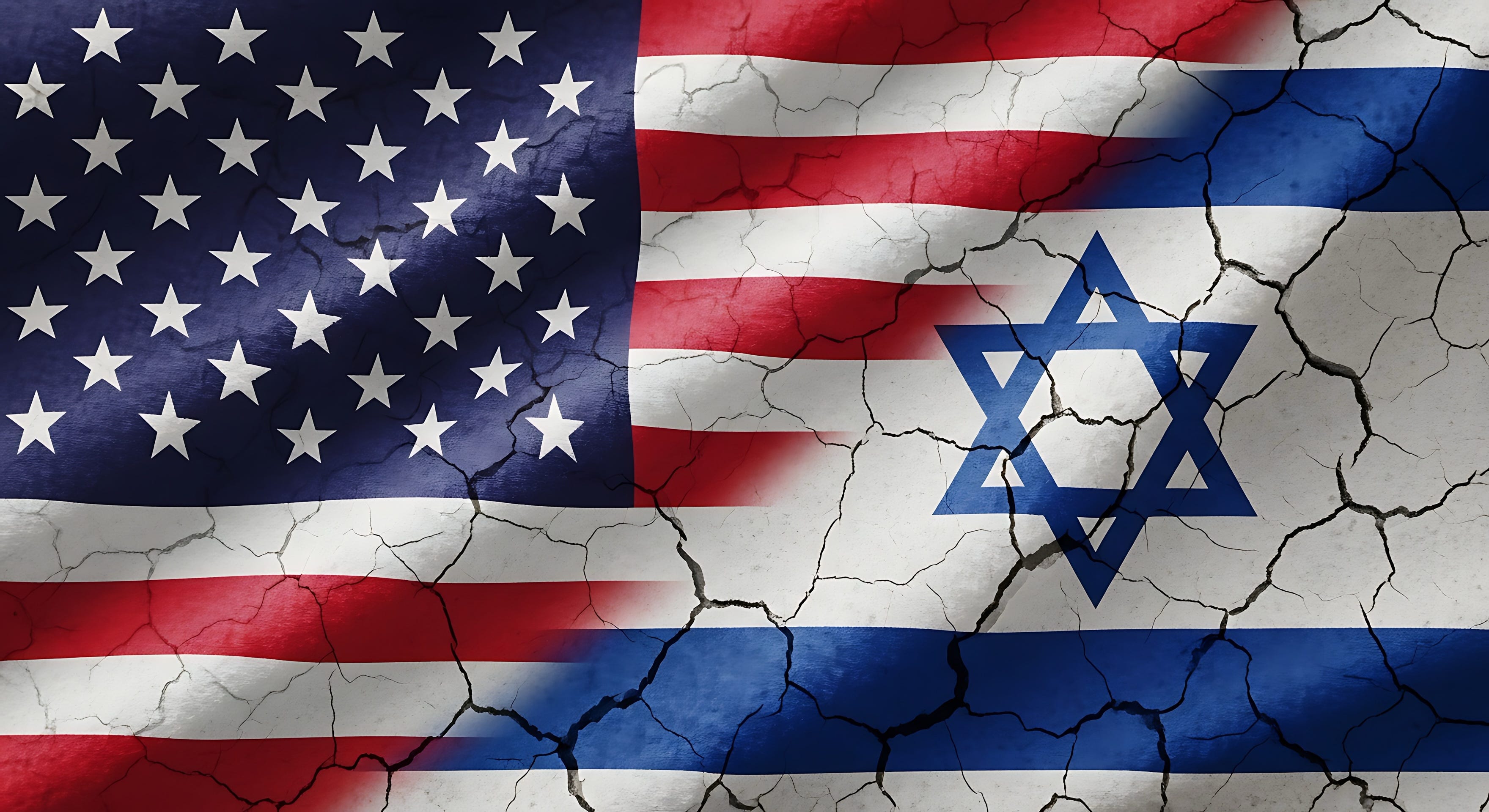
Growing up as an American Jew, I remember rhetorical games at the Shabbat table in which we wondered what would happen to us American Jews, supporters of Israel, if American and Israeli interests ever meaningfully diverged. This question always felt theoretical, as the moments of mild tension we saw between American presidents and Israeli prime ministers were always dispelled by reassurances that there was “no daylight” in the relationship.
This war with Iran represents the first moment in my lifetime where I see a great divergence taking place, where the American people are expressing that they see daylight, which will be exacerbated when the war continues to decline even further in popularity. And what then for us American Jews?
The Israeli case for going to war against Iran is straightforward, which explains why it is supported by over 90% of Israeli Jews, who rarely agree on anything. The American case to go to war against Iran is far less straightforward, which explains why most Americans oppose it. As a result, this war is testing the limits of the decades-long US and Israeli policy alignment in the region, even as the Trump administration’s approach seeks to further that alignment.
Iran has sought Israel’s destruction for decades, expressing its belligerence both through violent terrorist proxies that relentlessly attack Israel and in its nuclear aspirations. For Israelis, this latest round of bombing is not a new war but a continued escalation of the past several years of hostilities. Little wonder that they are wall-to-wall in their conviction that this threat must be mitigated, even as they scurry to shelters to survive Iran’s counterattacks.
Though Iran also harbors decades-long belligerence towards Americans, which it has also expressed in a history of terror and violence, Americans rightly do not experience Iran as constituting an existential threat to America itself. Americans are skeptical, after decades of failure, of costly foreign military entanglements and especially at military gambits at regime change. President Trump has chosen not to even try to sell this war to the American people, bypassing Congress. This echoes his unflagging commitment to ignoring democratic norms and processes and his tendency to make broad threats against Iran without articulating a coherent set of war aims or strategies.
It is increasingly evident that the President would not be able to convince us of the necessity of the war for Israel’s security either. The Democratic party is nearly uniform in its opposition to the war, reflecting a break from – or maybe fatigue following – its support for Israel throughout much of the Gaza war after the October 7 attacks. The Republican party is showing signs of significant erosion on this front as well, and not just from the powerful Tucker Carlson faction of the party, which ties its opposition to Israel to its nakedly antisemitic agenda. To see the Secretary of State venture aloud that America is being dragged into war by Israel, even if he later retracted it, is to see how thin the ice truly is in the historically-secure bipartisan history of this relationship.
Given this context and given climbing oil prices, it’s little wonder that the President is quickly pivoting from his expectation that the war will be prolonged to claims that the war could be over quickly. Or maybe not? Maybe the United States will continue bombing destroyed oil sites in Iran “just for fun?”
I think I am a pretty serious American Jew with reputable bona fides on Jewish peoplehood; but I am deeply ambivalent about America’s role in this war, and struggling: On one hand, I support the State of Israel as it fights a war that it deems necessary for its safety and survival. I feel deeply for my Israeli family and friends, not just as they attempt to survive yet another war but also as they face an increasingly global assumption that it is fair game for countries, movements, and people to threaten the Jewish state with annihilation and alienation with impunity. No other state or people is asked to endure such threats. I share their hope that one day Israel will live in peace with its neighbors, and I respect that it may need to finish this job in this regional war to reach that end.
And at the same time, with many of my fellow Americans, I do not believe in the President’s approach to using American power on the global stage, nor do I trust his intentions. I am unpersuaded that his approach to military issues differs in being any less haphazard than his approach to leadership more generally. I think the United States has failed in its responsibility to exhaust non-military options. I feel it is my responsibility to hold my government accountable for going to war under questionable pretenses, and to oppose it when it goes against American interests.
And I recognize that doing so could further the divergence of American and Israeli interests in the process, which I think is bad in the long run for American Jews and for Israelis; and, in today’s Jewish community even airing this ambivalence can be construed as disloyalty to the Jewish people or a capitulation to evil. What does it mean to strive to hold together an impossible cocktail - responsible behavior as an American citizen, a supporter of the State of Israel as it faces its existential challenges, and a believer in the idea of Jewish peoplehood that is supposed to transcend our divides?
This modern idea of Jewish peoplehood, which we American Jews in alignment with the rise of Zionism, argues that we are transnationally committed to each other, binding us to Jews around the world and them to us. This idea enabled us to be good American citizens while remaining loyal to the Jewish homeland in Israel, without contradiction. But this commitment to Jewish peoplehood was made easy by the fact that the US-Israel relationship remained so strong and secure and managed to transcend partisan divides.
History and geopolitics are no longer acting in our favor. Our politicians, who see opportunity in the continued partisanization and polarization of the electorate on every issue, will be of no help either. The Israeli government long ago lost interest in liberal Jews and our opinions, convinced of our imminent demise and seemingly more invested in building strategic relationships with Christians than in the hassle that comes with a commitment to Jewish peoplehood across difference; and in America, both parties are teetering when it comes to long-term consensus support for Israel, weakening the collective capacity of the Jewish community to operate as a polity with any sort of shared politics.
So daylight in the US-Israel relationship may be inevitable; but daylight in the relationship between American and Israeli Jews need not be. Peoplehood should not demand the kind of loyalty that would require us to subordinate our profound and different political needs and interests that stem from being good citizens of different societies. The Jewish people can be more mature than that, and wiser. Peoplehood can remain a countercultural commitment, as we decide that our bonds matter even when we can no longer take for granted that our interests as Jews in different countries do not fully align. Even amidst a war, the real demands of peoplehood are mutual commitments to curiosity in how each of us is confronting the challenges of citizenship and survival under radically different conditions; mutual commitments to empathy for one another; and the simple decision that the Jewish people do not walk away from one another.
This engages all the contradictions and nuances of this moment and, in a way, heartbreaking.
Wow Yehuda. Very brave to express this. American Judaism and Israeli Judaism can and do co-exist now and in the future.