

Eastward Bound
On returning to Jerusalem, with clear and cloudy skies

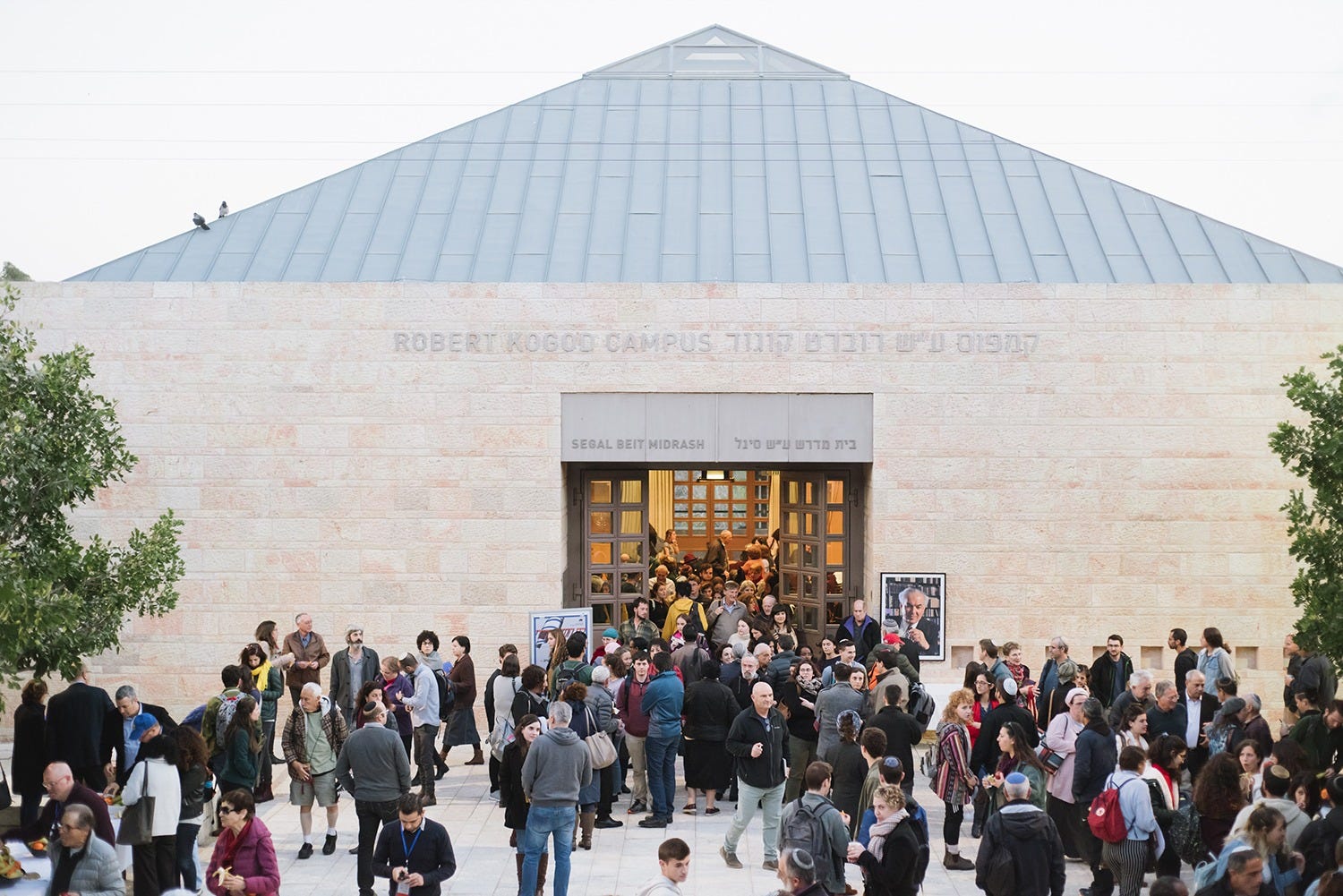
I’m about to board a plane to travel to Israel to help reinaugurate #HartmanSummer, following the 2025 cancellation due to those memorable “global force majeure” events, whose ramifications – and denouement? – we are witnessing this week. For a few weeks, I’ve been telling people that yes, we are planning on being in Israel this summer, God-willing and Trump-permitting. Like them or not, those were probably the most significant forces making it possible for us to run our programs under (hopefully) clear skies, maybe combined a bit with our unrelenting, indefensible optimism that we could plan for all-systems-go.
I realized until today, when I was finally packing – I waited as long as I could before I fully committed to the bit – that I’ve been holding my breath for a long time. I vastly prefer going to Israel than talking about it, or arguing about it, the latter of which consumes too much of my time. This commitment to get to Israel regularly, even during trying times, runs deep and long for me. It includes living in Israel as a child (so not by choice) in the early days of the first intifada, studying in Israel before college during a wave of horrific terror attacks and the assassination of a prime minister, many summers and visits during the difficult years of the second intifada, and then consistently since I started at Hartman when it has seemed that a war has happened during our summer programs more often than not. I traveled to Israel 5 times during the year that followed 10/7, including arriving there on 10/14 to see the wreckage on the ground and on people’s faces.
It is all very personal. I speak often about how Stephanie and I have a phrase in our house that we use in times like this, including at fragile moments when we have sent our kids to Israel to tour or study, which is that when it comes to Israel, “we don’t not go.” Yehuda Halevi was afflicted by the feeling that his heart was in the land of Israel, but he was trapped far away, in the uttermost west. I am never sure where my heart is, but I never want to feel trapped anywhere when modern travel technology has made it so easy to fly back and forth. It is also personal, of course, because of my dear friends and colleagues in Israel, my beloved great-nephews and great-nieces (and their parents), the foods I cherish, the back streets I love to wander, the air, the romance, the drama. I don’t expect these personal tugs to be shared by everyone, but I do wish that more people created the emotional availability to engage with Israel in ways like this that transcend politics and engage the human and Jewish imagination. This is part of why I feel so scandalized by the growing number of politicians and my fellow Americans who insist that the only frame with which we are meant to connect Judaism and Israel is political in nature, who do not understand the deep tethering of this relationship — whether it manifests in eros or fury.
But the primary reason I am going right now is professional in nature. I lead this Institute and these programs at our home campus, and I think this choice to be there tries to represent the kind of union between Diaspora and Israeli Jews to which we aspire, one that requires us to be with each other, even in (especially in?) such hard times. My professional responsibilities also demand that I understand Israel and Israelis in ways that cannot be achieved without physical presence. I always return armed with a more sensitive understanding of the nature of Israel’s challenges - sometimes more empathic, sometimes angrier - which is indispensable to the important work of thought-leadership about Israel that our community needs. When I go, I am always humbled by what I discover that challenges what I thought I understood.
Risks remain, for our programs, our people, for the precious people and peoples between the river and the sea. I won’t feel that the programs are real until the courtyard fills up; we are weighted with the heaviness and fear that have characterized the last few years, the uncertainty of rocket attacks, tenuous cease-fires, and the risk of the outbreak of sustained violence.
Neither now nor ever do I try to ‘convince’ people to fly to Israel during risky times, even when it is in my personal or institutional interest to do so. This includes parents trying to decide whether to entrust their children to our care for a gap year program, or even Hartman staff who are ambivalent about going even if they are needed to do their jobs for a program in Jerusalem. It would be hubris to claim that I can see the future or to suggest that I have the capacity to protect them from harm. It is just that personally, I have found that these experiences in traveling to Israel during contentious and scary times have left me with more deep memories than scars; though I also cherish the few scars, in the way that our bodies become shrines to the triumphs and tribulations of the past.
In general, I do not believe that traveling to Israel is an inherently dangerous or scary proposition, even if it might seem unusual to our fellow Americans that we choose to spend our leisure time in a region that appears like a war zone instead of a normal vacation spot with mai tais. I think Matti Friedman is right when he points out that this region is painted as far more volatile and dangerous than it is when it is situated in comparison to not just other contested global areas but even most major American cities. I think the intensity of the coverage of Israel, and the place it holds in our attention and hearts, make us see these fears as more pronounced. Post-10/7 and post-Gaza, the issue of going to travel is not just about fear but also about proximity to horror. I get the ambivalence.
Still, I suspect that much of that ambivalence about going to Israel right now is less about fear of danger, and more about fear of fear. This is not a small thing. We bear different sensitivities around this, for what we want our bodies to be able to hold and what we want to subject our families to. In my experience, my children remember the ice cream in Israel - a daily, sometimes twice daily experience in the summer - far better than they remember the sirens; and even the sirens, I think, fostered more empathy in them than fear, more understanding than an experience of alienation. But of course, our children and our biases differ, and once again I do not imagine my experience as necessarily instructive to others.
But it is how I walk the world and choose to walk the streets, and how I have found a deeply meaningful way to integrate the experience of being in Israel into my Torah and into my leadership. I am proud of what we do at #HartmanSummer to be on our gorgeous campus, where we get to take care of rabbis and educators in appreciation of what they do for others throughout the year, and where we get to challenge all of our learners to practice a life of considered contemplation about the most complicated issues we face. What a privilege. And to spend a little time with the people, the half of the Jewish people who live there, the Palestinians whose lives and fates are intertwined with our own, to inhabit the recognition of the ties that bind us and the worlds and worldviews that pull us apart.
Where else but Jerusalem (and Tel Aviv, too.) Hope to see many of you there.
Yehuda, I just read your column on my flight - it perfectly captures many of the thoughts and emotions I've been thinking about and feeling in the weeks and days leading up to today. Looking forward to being together soon!
Yehuda, You express yourself so well. I appreciate your words and I sincerely appreciate you. I hope we get to see you when you're here in Israel.